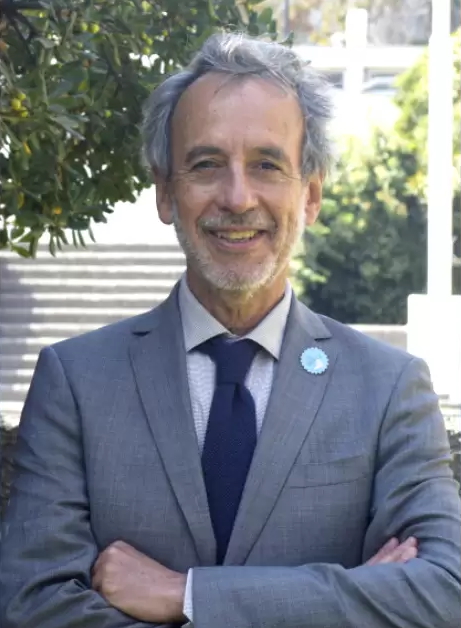
The directors of the Latin American Center for Physics (CLAF) are elected by the Governing Council every four years and are tasked with implementing the work plan approved biennially by the CLAF General Assembly.
At its 44th ordinary session, held on November 21, 2024, in Lima (Peru), the Governing Council elected Brazilian experimental physicist Ulisses Barres de Almeida as its ninth director.
In chronological order, the former directors of CLAF were:
Gabriel Emiliano de Almeida Fialho (Brazil, 1920-1986) — Director from 1962 to 1968
An officer of the Brazilian Navy, Fialho earned a PhD in theoretical physics from Columbia University (USA), carrying out research in the field of elementary particle physics. He was the first director of CLAF, serving in this position from the founding of the institution on March 26, 1962.
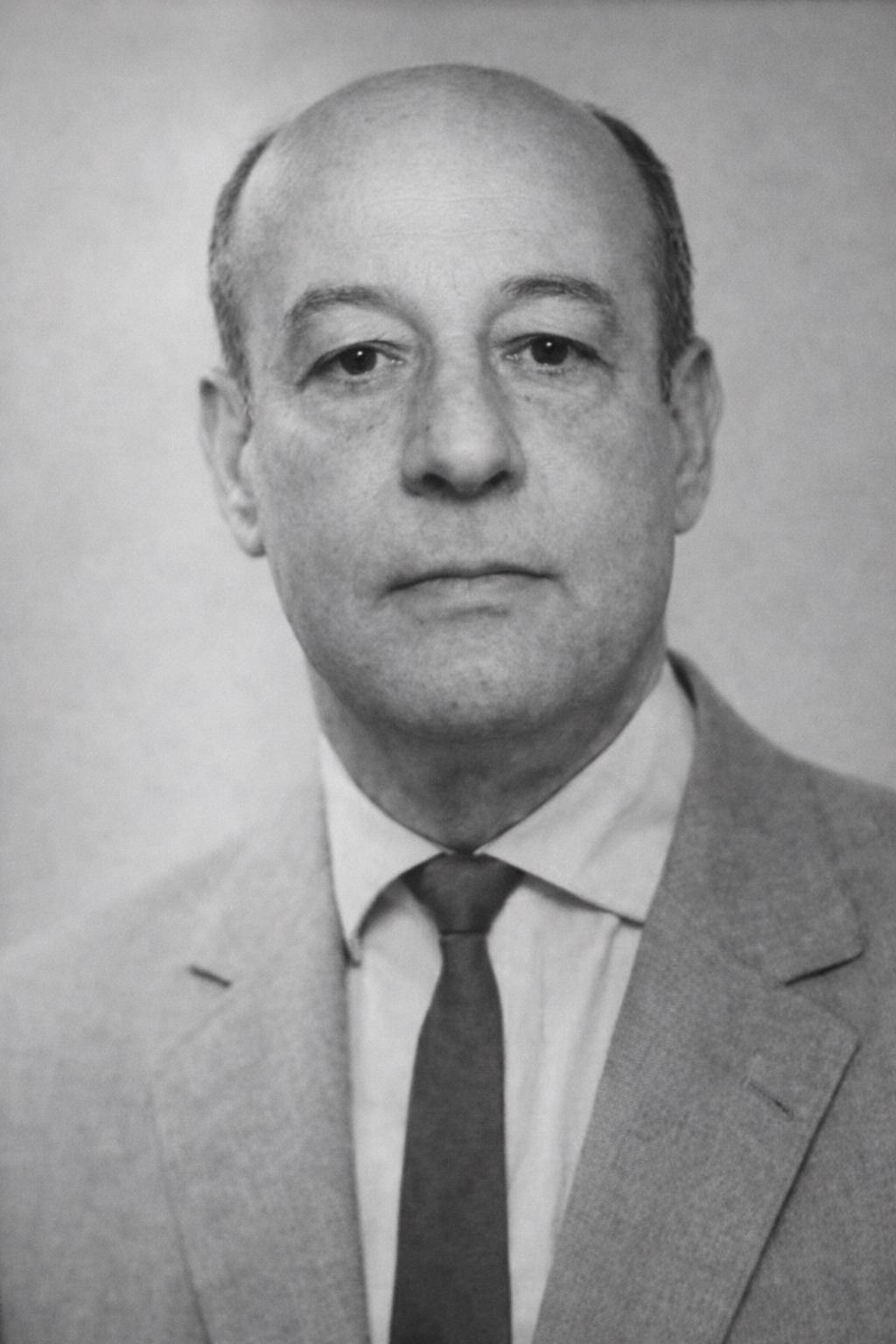
Roberto Bastos da Costa (Brazil, 1925-2008) — Director from 1969 to 1985
Graduated in chemistry from the former University of Brazil, he joined CLAF in 1963 as Head of the Human Resources Training Department. In 1966, he represented Brazil at the UNESCO General Conference and created the bulletin Noticia del CLAF, intended to disseminate the institution’s activities. He was elected a member of the Colombian Physical Society and of the Brazilian Society for the Advancement of Science.
Between 1969 and 1985, he served as director of CLAF, leaving invaluable contributions both to the development of physics and related sciences and to academic exchange among universities and physics departments in several Latin American countries.
Bastos consistently emphasized that, based on the 1964 UNESCO agreement entitled Lagos Plan of Action for Science and Technology Training and Research Institutions, each country should invest at least 1% of its GDP in science, as well as maintain approximately 200 PhDs in physics per million inhabitants.
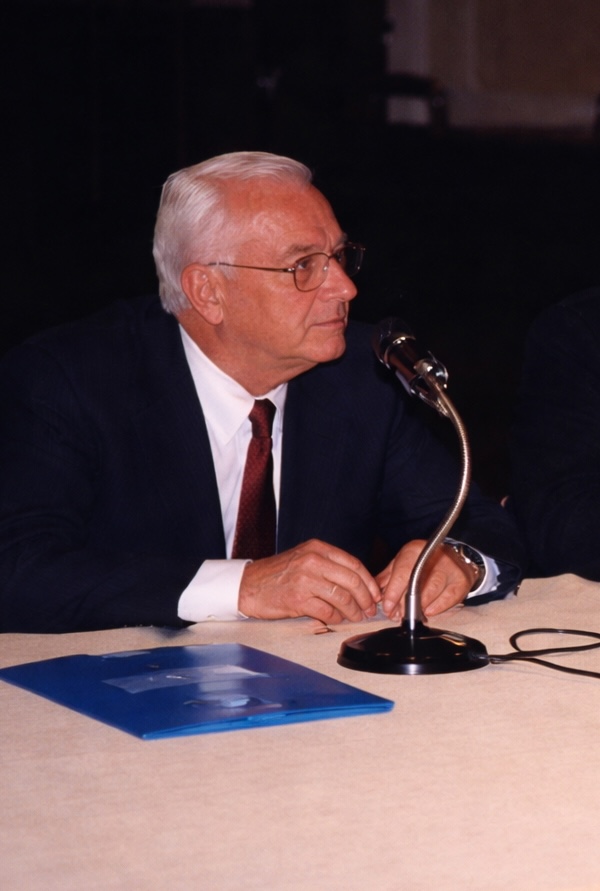
Juan José Giambiagi (Argentina, 1924-1996) — Diretor entre 1986 a 1993
He earned his bachelor’s and doctoral degrees (1950) in physics from the University of Buenos Aires. After completing a postdoctoral fellowship in 1953 with the Belgian physicist Léon Rosenfeld (1904–1974) at the University of Manchester (UK), he was invited by José Leite Lopes (1918–2006) to join the then newly founded Brazilian Center for Research in Physics (CBPF) in Rio de Janeiro, where he carried out internationally impactful work in collaboration with Brazilian physicists Jayme Tiomno (1920–2011) and Samuel Wallace MacDowell (1929–2020).
In 1959, he was one of the founders of the Latin American School of Physics, together with Leite Lopes and Mexican physicist Marcos Moshinsky (1921–2009).
At CLAF, Giambiagi promoted the development of research initiatives of economic interest in which physicists could make significant contributions, such as studies on the El Niño ocean current, climate physics, Antarctic research, and the search for oil reservoirs.
He was convinced that strengthening science in Latin American countries would not be possible without establishing local demand for specialized scientific knowledge.
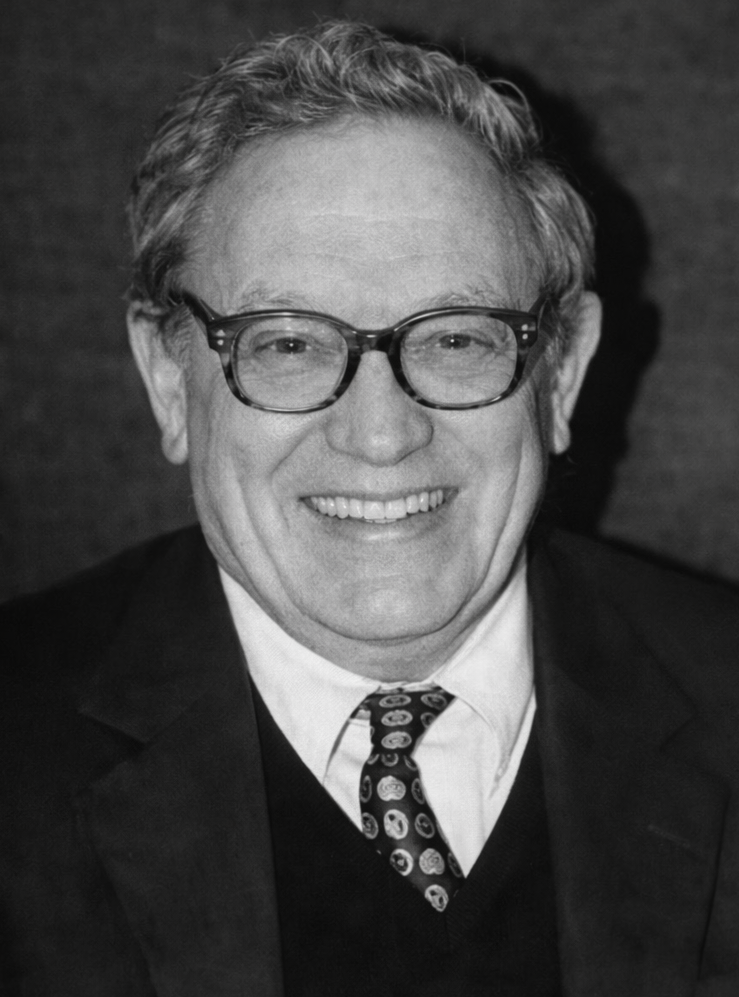
Carlos Alberto Aragão de Carvalho Filho (Brazil, 1951- ) — Director from 1994 to 1998
He earned bachelor’s and master’s degrees in physics from the Pontifical Catholic University of Rio de Janeiro (PUC-Rio) and a PhD in physics from Princeton University (USA). He held research appointments at the European Organization for Nuclear Research (CERN) in Switzerland and served as a professor at Université Paris XI, in Orsay.
In Brazil, he was a professor at PUC-Rio from 1983 to 1992, where he chaired the Department of Physics. From 1994 to 2016, he was a full professor at the Federal University of Rio de Janeiro. His research focused on quantum field theory and its applications to particle physics, statistical physics, and condensed matter physics.
As director of CLAF (1994–1998), he expanded the center’s fellowship program to include all Brazilian institutions, beyond CBPF, supported numerous scientific events, and promoted scientific exchanges.
After leaving CLAF, he served as President of the National Council for Scientific and Technological Development (CNPq) from 2010 to 2011; Director General of the National Center for Research in Energy and Materials (CNPEM) from 2011 to 2014; Director of Innovation at the National Institute of Metrology, Quality and Technology (Inmetro) from 2014 to 2016; and Scientific Consultant to the Naval Nuclear Safety Agency from 2017 to 2023.
He is a member of the Brazilian Academy of Sciences (ABC) and of the World Academy of Sciences (TWAS). Since 2023, he has served as Director of Scientific and Technological Development at Finep, an agency linked to the Brazilian Ministry of Science, Technology and Innovation — a position he had previously held from 2005 to 2007.
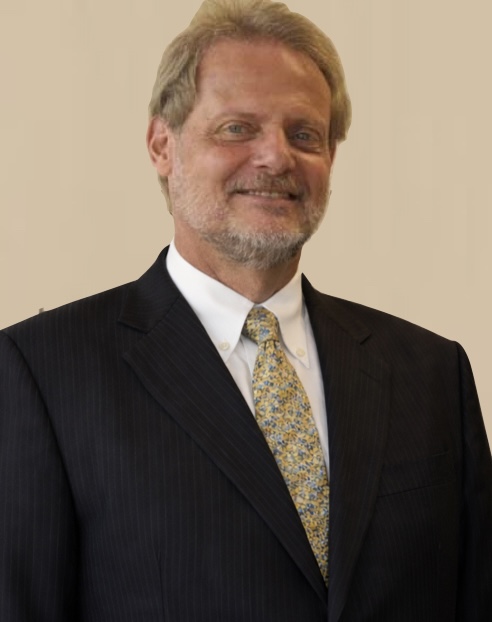
Luis Másperi (Argentina, 1941-2003) — Director from 1998 to 2003
Born in Italy and arriving in Argentina during childhood, he studied and graduated in chemical engineering. He later settled in Bariloche, where he joined the Balseiro Institute of the Atomic Center and earned his PhD in physics.
At the end of 1982, together with Francisco De Haro, Matilde Hermann, Susana Rosatti, among others, he organized the local section of the Permanent Assembly for Human Rights (APDH), an organization he actively promoted for many years.
Known for his remarkable serenity, he was characterized by measured and respectful opinions in all settings and was a strong defender of democracy. As a scientist, Másperi achieved notable national and international recognition, delivering lectures in several countries. He was a professor at the Balseiro Institute for more than three decades and an active advocate for human rights and pacifist principles.
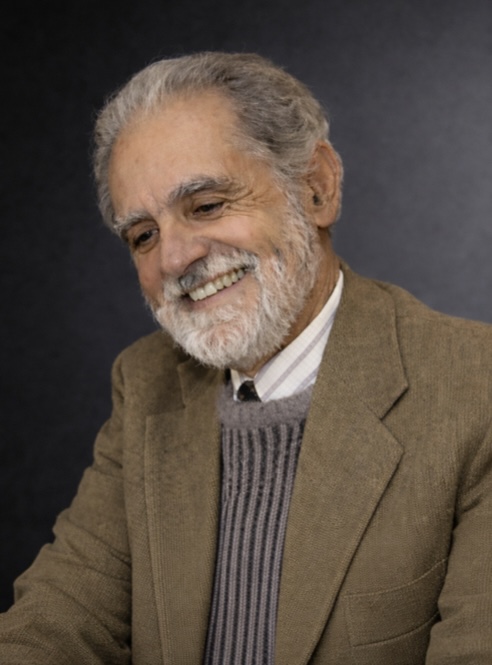
Feliciano Sánchez Sinencio (Mexico, 1938- ) — Director from 2004 to 2012
He earned a master’s degree in physics from the Brazilian Center for Research in Physics (CBPF) in 1966 as a CLAF fellow, and a PhD from the University of São Paulo in 1969. In Mexico, before becoming a researcher at the Center for Research and Advanced Studies (Cinvestav) — where he later served as Director General — he taught at the Hebrew University of Jerusalem and Princeton University (USA). He served as President of the Mexican Society for the Popularization of Science and Technology (Somedicyt) and as a member of the Science Advisory Council of the Presidency of the United Mexican States.
His scientific contributions include the discovery of oxygenated amorphous cadmium telluride (CdTe) as a new insulating semiconductor, as well as other semiconductor materials, including CdTe-based ternary compounds.
He is recognized as a pioneer in the study of electronic transport in sulfur crystals and polycrystalline semiconductor materials, as well as in the application of photothermal deflection spectroscopy to semiconductor research. He also devoted himself to the study of maize flour nixtamalization, seeking to understand and improve the mechanical, thermal, and nutritional properties of the process.
As CLAF director, he led an important external evaluation of the institution’s activities through a panel of international researchers.
Carlos Trallero Giner (Cuba, 1947- ) — Director from 2012 to 2020
He earned a master’s degree in physics from the University of Havana (Cuba) and a doctorate in physical and mathematical sciences from the Ioffe Institute (Russia). Throughout his career, he collaborated on research projects in Latin America, Europe, the United States, and Asia.
As head of CLAF, Trallero worked to improve the quality of development activities supporting science, technology, and education.
Among the initiatives he led, the following stand out: i) promoting the development of master’s and doctoral programs in member countries where graduate education was absent or incipient; ii) improving mobility programs for fellows in the region; iii) strengthening exchanges between CLAF and Latin American Physical Societies for the implementation of joint science policies.
He also sought mechanisms to improve interaction between physics and the productive and industrial sectors in the region.
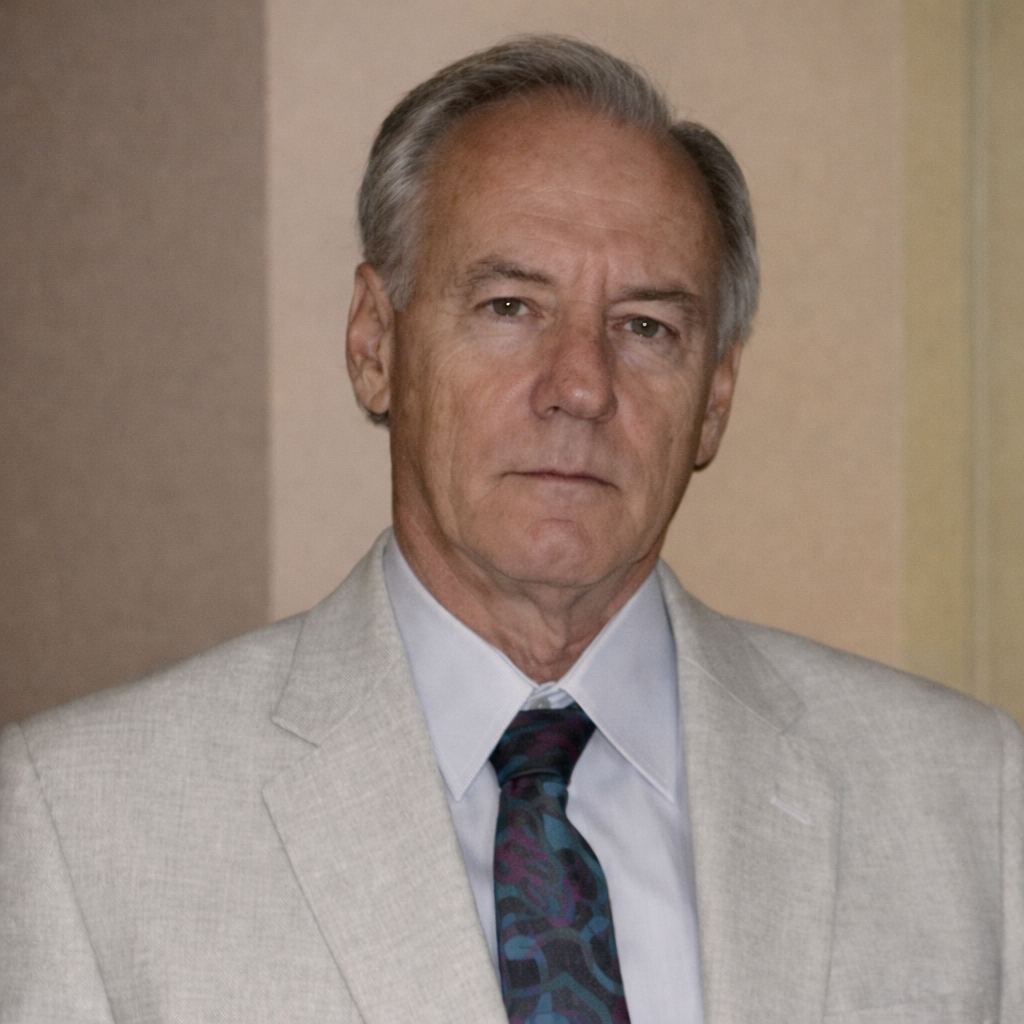
Luis Huerta Torchio (Chile, 1956- ) — Director from 2020 to 2024
A theoretical physicist with a PhD from the Pontifical Catholic University of Chile, he was a postdoctoral researcher at the Center for Scientific Studies (Chile) and conducted research at the International Centre for Theoretical Physics (ICTP) in Trieste, Italy.
He was a researcher at the University of Talca (Chile), where he created and directed a doctoral program in applied sciences, and later served as the institution’s Vice-Rector for Academic Affairs.
He acted as a consultant for the Ministry of Education and Fundación Chile. He was one of the founders of the Interactive Museum Mirador, where he served as Scientific Director. Science communication and education were among his main professional interests throughout his career.
His research spans several areas of physics, from quantum optics to high-energy physics. In May 2023, he was appointed Executive Director of the Chilean Nuclear Energy Commission (CCHEN), a position he held until the end of 2025.