


The creation of a Latin American Center for Physics was proposed by the Government of the Federative Republic of Brazil through Resolution 11C/DR/29, approved by the 11th UNESCO General Conference on November 14, 1960. CLAF was formally established as an intergovernmental organization under the auspices of UNESCO on March 26, 1962, with the signature of 15 Member States, later joined by Argentina in 1964.
CLAF was established with headquarters at the Brazilian Center for Research in Physics (CBPF), with the primary mission of supporting “the conduct of scientific research in Physics, and the training of human resources for this purpose, in Latin America.” According to the headquarters agreement, CBPF, as a Research Center of the Federal Government of Brazil, is responsible for providing CLAF with all necessary scientific, technical, and administrative personnel, as well as the facilities and laboratories required for its operation. Relations between CLAF and the Brazilian Government were defined in their current form through Federal Decree No. 362 of December 10, 1991.
The institutional relations between CLAF and UNESCO, as provided for in the Center’s founding statutes, were formalized on March 23, 1967, when the organizations signed a framework agreement (cf. Resolution 76/EX19 of the UNESCO Executive Board) defining and regulating the close collaboration between them and granting CLAF observer status at UNESCO General Conferences. In this context, UNESCO conducted four periodic evaluations of CLAF, the first in 1971, known as the Kastler Mission, and later in 1978, 1984, and 2000.
CLAF’s organizational structure comprises two administrative bodies: the General Assembly and the Governing Council, the latter being responsible for electing the Director, who oversees the general administration of the Center. The General Assembly (GA) is the highest authority of the Center and meets every two years. It is composed of representatives of the governments of CLAF Member States, each entitled to one vote, as well as one representative of UNESCO without voting rights.
The Directive Council (CD), elected by the GA, consists of ten members qualified in physical sciences and of different nationalities, with three chosen by the GA from among Mexico, Central America, and the Caribbean; three from Bolivia, Colombia, Ecuador, Peru, and Venezuela; and four from Argentina, Brazil, Chile, Paraguay, and Uruguay. Each council member has an alternate. The CD meets annually to review and prepare the Center’s program and budget and, every two years, submits them to the GA for formal approval. The GC is also responsible for electing the Director of CLAF, who serves a four-year term with no limit on reappointment. The Governing Council also includes one observer representing UNESCO and another representing CBPF.
To date, CLAF Directors have always been physicists, although this is not a statutory requirement, and the Center’s administrative staff is entirely seconded to CLAF by CBPF. The Directors of CLAF have been: Gabriel E. A. Fialho (Brazil, 1962–1968), Roberto Bastos da Costa (Brazil, 1969–1985), Juan José Giambiagi (Argentina, 1986–1993), Carlos Alberto Aragão de Carvalho Filho (Brazil, 1994–1998), Luis Másperi (Argentina, 1998–2003), Feliciano Sanchez Sinêncio (Mexico, 2004–2012), Carlos Luis Trallero-Giner (Cuba, 2012–2020), and Luis Huerta Torchio (Chile, 2020–2024).
The 9th Director of the Center, elected at the 44th Session of the Directive Council (CD), held in Lima, Peru, on November 21, 2024, is the Brazilian physicist Ulisses Barres de Almeida, Senior Researcher at the Brazilian Center for Research in Physics, with a four-year term beginning on March 1, 2025
Access the brochure here for more information about CLAF.
=================================================================================================
Ulisses Barres de Almeida (2025 - )
Elected in 2024, Ulisses Barres envisions positioning CLAF at the center of the challenges facing the development of Latin American physics in the twenty-first century.
Guided by this vision, he is promoting a number of initiatives aimed at advancing physics research through new cooperation programs with Latin American and international institutions, as well as actions that foster physics education, including the revival of the Latin American School of Physics. These efforts are undertaken with particular attention to the participation of women in physics and with a focus on the less-developed countries of the region. Another key priority is to strengthen the role of CLAF as an instrument of science policy and science diplomacy, promoting regional development through integration and cooperation on strategic issues.
Ulisses Barres earned his Bachelor’s degree in Physics from the University of São Paulo and received his Ph.D. from Durham University, United Kingdom. He subsequently worked as a Research Assistant at the Max Planck Institute for Physics in Munich, Germany. An active researcher in the field of Astroparticle Physics, he developed his scientific career at the Brazilian Center for Physics Research (CBPF), where he is currently a Senior Researcher, having played a pioneering role in the development of gamma-ray astrophysics in Brazil.
As South American spokesperson of the SWGO Collaboration, he is deeply involved in the construction of what will become one of the world’s leading gamma-ray observatories, to be installed in the Andes Mountains. He also actively contributed to Brazil’s participation in the Cherenkov Telescope Array Observatory (CTAO), serving as the Brazilian delegate to the CTAO ERIC Council.
Ulisses Barres is committed to repositioning CLAF as one of the leading platforms for the promotion of physics in Latin America, through effective actions of regional integration and cooperation, and as a driving force for the development of this scientific discipline in collaboration with governments and the principal institutional stakeholders of the region, for the benefit of all CLAF Member States.
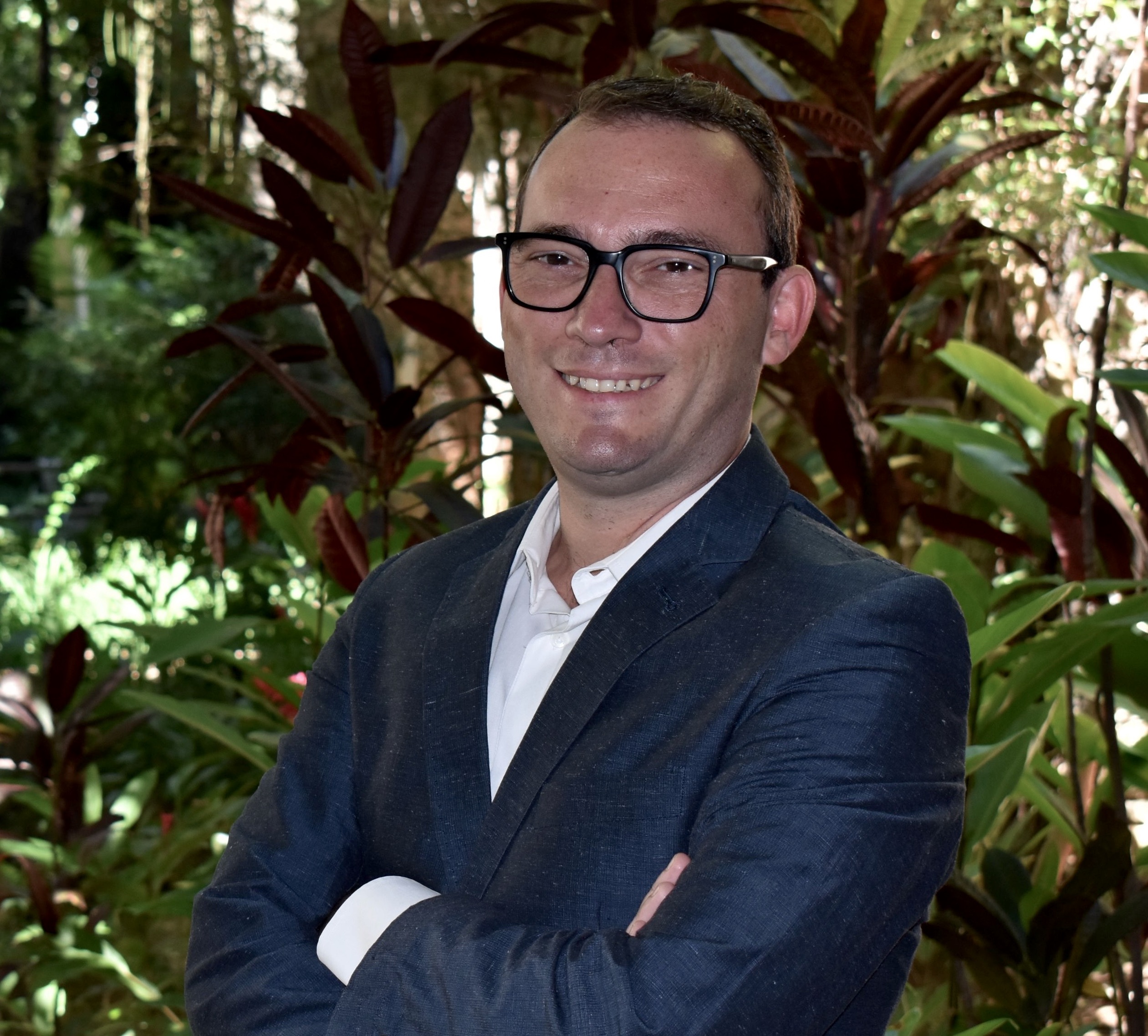
Ulisses Barres de Almeida
Senior Researcher
Centro Brasileiro de Pesquisas Físicas (CBPF)
Tel.: +55 (21) 2141-7267
ulisses@cbpf.br
=================================================================================================